



Select your language →
Moving Costs from BARMER

Butler Umzüge GmbH – Nationvide

Moving Costs from BARMER

seal butler umzug

Please enter your full name here.

Move-out Address (Old Apartment)

Move-in Address (New Apartment)

A move is often more than a change of address. For older adults, people with disabilities, and individuals with an official care grade, relocation can be a crucial step toward safer daily living, easier caregiving, and greater independence. In Germany, the BARMER care fund can support such moves if they improve the living environment in a meaningful way. 

Jetzt Angebot sichern

Butler Umzüge GmbH presents itself as a full-service moving company that helps customers organize relocations across Berlin and throughout Europe, including moves connected to care needs and barrier-free housing transitions. For people applying to BARMER for a subsidy, this combination is especially useful because the company can prepare cost estimates, coordinate logistics, and support the documentation needed for the application.

This article explains how BARMER relocation support works, what costs may be covered, how to apply step by step, and how Butler Umzüge GmbH can support the process from the first consultation to the final move. It is designed as a practical text that can be transferred directly into a Word document and formatted into a professional guide or service article.

The BARMER care fund can grant subsidies for measures that improve the living environment of people with an established care grade. According to BARMER, this includes modifications to the home and, in suitable cases, the cost of moving to a barrier-free or otherwise appropriate apartment. The key requirement is that the measure must make home care possible, significantly ease care, or help restore a more independent way of living.

The subsidy amount can be up to 4,180 euros per eligible person. If several people with care needs live in one household, the total subsidy can reach up to 16,720 euros for the household under the currently cited BARMER framework. This makes the program particularly relevant for couples, family households, and shared living arrangements where multiple residents need care-related support.

BARMER also makes clear that costs for a move into a nursing home are generally not covered under this subsidy path. The support is instead aimed at living situations that improve home-based care, accessibility, and daily independence.

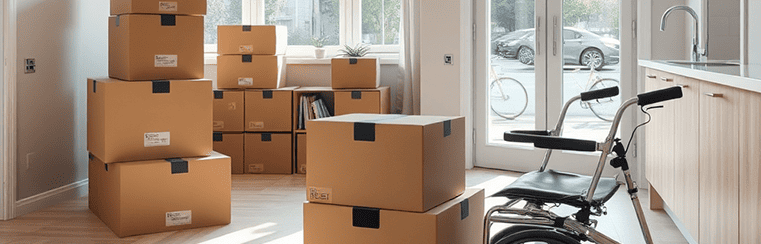
Eligibility is centered on the existence of a recognized care grade. BARMER states that persons with care grades 1 to 5 can apply for support under the housing adaptation framework. The care grade alone is not enough, however; the planned measure must also be justified by the person’s living situation and care needs.

The move or modification should clearly serve one of three purposes: it must enable caregiving, make caregiving significantly easier, or restore a more independent life for the person concerned. That is why applications usually need an explanation of current barriers, how they affect everyday life, and how the planned relocation will solve the problem.

Applicants should also note that the subsidy is intended for specific approved measures. In practice, this means the cost estimate should be as precise as possible and should describe only the services that are directly connected to the approved relocation or adaptation. Expenses incurred before approval are at risk of not being reimbursed.

BARMER’s published information shows that moving costs can be part of the subsidy when the move is medically or care-related and leads to a better living environment. This can include the actual transport of furniture and household goods, moving-related labor, and in some cases the additional work needed to fit the new apartment to the person’s needs.

The key point is that the move must be tied to the goal of improving care or accessibility, not simply to a personal preference for a new address. For example, a ground-floor apartment, an apartment with an elevator, or a home with more accessible bathroom and doorway layouts may qualify more easily than a standard move with no health-related purpose.

If the new home still requires adaptations, those may also be considered separately as housing modifications. That means a move and a home adaptation can sometimes be combined in one broader application, as long as the overall plan is coherent and well documented.

The application should be submitted before the move begins. BARMER provides an application for housing adaptation, and its guidance indicates that a written request with justification may also be accepted in some situations. The essential rule is that the insurer should approve the measure in advance.

First, the applicant gathers evidence. This usually includes photos of barriers in the current home, a written explanation of the care-related problem, and, where useful, medical or care-related documents that support the need for relocation. The more clearly the situation is described, the easier it is for the care fund to assess necessity.

Second, a professional cost estimate should be obtained. Butler Umzüge GmbH is relevant here because the company offers moving services and publishes pages specifically addressing BARMER-related moves and cost reimbursement topics. A structured estimate from an experienced moving company helps the care fund understand what the move will cost and what exactly is being requested.

Third, the application is submitted and reviewed. BARMER checks whether the measure is necessary and whether another benefit provider may be responsible. Only after written approval should the move or adaptation be carried out.

Butler Umzüge GmbH describes itself as a moving company based in Berlin that offers broad moving services, including transport, packing-related services, storage, and other full-service relocation support. Its website content also highlights that it works with moving scenarios tied to insurers and care-related funding.

For BARMER-related cases, the company’s practical value lies in three areas. First, it can prepare a detailed cost estimate suitable for submission with the application. Second, it can manage the move in a way that is compatible with barrier-free needs, such as careful handling, organized scheduling, and potentially special moving support. Third, it can reduce the administrative burden for families or individuals who are already dealing with care obligations.

The company also advertises Berlin-specific advantages, including no travel costs within Berlin according to its own service statements. That can be useful for customers trying to keep the move affordable while waiting for reimbursement or direct payment from the care fund.

A full-service move means that the company takes over many of the tasks that normally fall on the customer. Based on Butler Umzüge GmbH’s published service structure, this can include planning, packing support, transport, unloading, and optional additional services such as storage or disposal-related support. For people with care needs, this is especially important because a move can otherwise be physically exhausting and difficult to coordinate.

In a care-related move, the most important service is not only the transport itself but also the careful coordination of dates, access conditions, and household-specific requirements. A mover familiar with such cases can help ensure that the new home is ready, that essential furniture arrives on time, and that the move is arranged with minimal strain. This is especially valuable when the move is linked to a hospital discharge, caregiving setup, or a need to avoid stairs and other barriers.

The full-service model is also helpful when documents must be prepared for insurers. A company that can issue a clear estimate and explain the scope of work reduces the risk of misunderstandings with the care fund. In practice, that can make the difference between a smooth approval process and a delayed or incomplete application.

A company like Butler Umzüge GmbH can be useful in several ways when a move is connected to care needs. First, it can provide a professional, structured offer that can be attached to the subsidy application. Second, it can carry out the actual move efficiently and with less physical strain on the client or relatives. Third, it can adapt the service level to the special requirements of older or care-dependent people.

In practice, this may mean helping with packing, furniture disassembly, transport of medical aids, and careful placement of belongings in the new home. For someone with limited mobility, these services can make the move safer and much less stressful. A full-service company also reduces the chance of damage or delays, which is important when the new home must be ready quickly.

For families managing a relocation on top of care responsibilities, professional support can also reduce emotional pressure. Instead of trying to coordinate helpers, transport, and equipment alone, the family can rely on one provider to handle the logistics. That leaves more time and energy for personal and medical concerns.

Barrier-free relocation is not only about comfort. For many people with care needs, the physical layout of a home directly affects whether daily life is manageable, safe, and dignified. Stairs, narrow doorways, unsuitable bathrooms, and difficult access routes can all increase dependency and risk.

BARMER’s own materials emphasize that housing adaptation should support care at home and improve self-sufficiency. A move to a more appropriate apartment can therefore be a practical care intervention rather than a lifestyle decision. The right apartment can reduce the need for assistance, lower the burden on family caregivers, and make everyday routines easier.

This is exactly where a specialized moving company can add value. Butler Umzüge GmbH can help with the logistics of moving into a more suitable home while keeping the process organized and efficient. For households under time pressure, or for people who need to move because the current home no longer fits their health situation, that support can be decisive.

A strong BARMER application usually includes the completed form for housing adaptation or a written request that explains the purpose of the relocation. The explanation should show why the current home no longer works and how the new housing situation will improve care or independence.

Helpful supporting documents include photos, short descriptions of barriers, medical evidence where relevant, and a cost estimate from a moving company or contractor. If multiple residents with care grades live in the same household, each person generally needs their own application or to be clearly included as required by the form.

It is also sensible to keep all communication in writing. That means saving submitted forms, email confirmations, estimates, and the approval notice from BARMER. Good documentation makes reimbursement and later follow-up much easier.

FAQ

It is financial support for housing adaptations or a move that improves the living environment for someone with a recognized care grade. The goal is to make care easier, enable care, or improve independence.

People with care grades 1 to 5 can apply if the planned measure meets the care-related conditions. The measure must be justified by the living situation, not by convenience alone.

BARMER’s published information cites up to 4,180 euros per eligible person, with household totals reaching up to 16,720 euros when multiple care-dependent persons live together.

Yes, in suitable cases the cost of moving into a barrier-free or care-appropriate apartment can be subsidized. The move must be connected to care needs and improved living conditions.

No, BARMER states that costs for moving into a nursing home are generally not covered by this support.

Yes. Approval should be obtained before the relocation or adaptation begins. Costs incurred beforehand may not be reimbursed.

Typically, you need the application form or a written request, photos of the barriers, a justification, and a cost estimate. Additional medical documents can help in individual cases.

Because the company publishes services and information related to moving, cost estimates, and BARMER-related relocation support. That can make the process more efficient and easier to document.

As of the 2025 care reform, the maximum subsidy per person is €4,180. If multiple people with care needs live in the same household, the total amount can increase to a maximum of €16,720 per household.

The relocation must either enable caregiving, significantly ease caregiving, or restore the individual’s ability to live independently. Supporting documentation and justification are required for approval.

The subsidy is intended to cover costs directly associated with improving the living environment. This includes moving expenses, modifications to create barrier-free living spaces, and other necessary adjustments. However, the specific coverage depends on the approval of the care fund.

Yes, individuals with Care Grade 1 are eligible to apply for the relocation subsidy, as long as the move meets the necessary conditions set by the BARMER Care Fund.

Typically, you will need a completed application form, a detailed cost estimate from a professional service provider (e.g., a moving company), and supporting documents such as photos of your current living environment and a written justification for the move.